Creator-Leitfaden
Wie erfahrene Creator Comic Background Generator nutzen
Diese Hinweise helfen zu entscheiden, was geplant, was ignoriert und wann ein Entwurf weiterverarbeitet werden sollte.
Brief Comic Background Generator around one deliverable
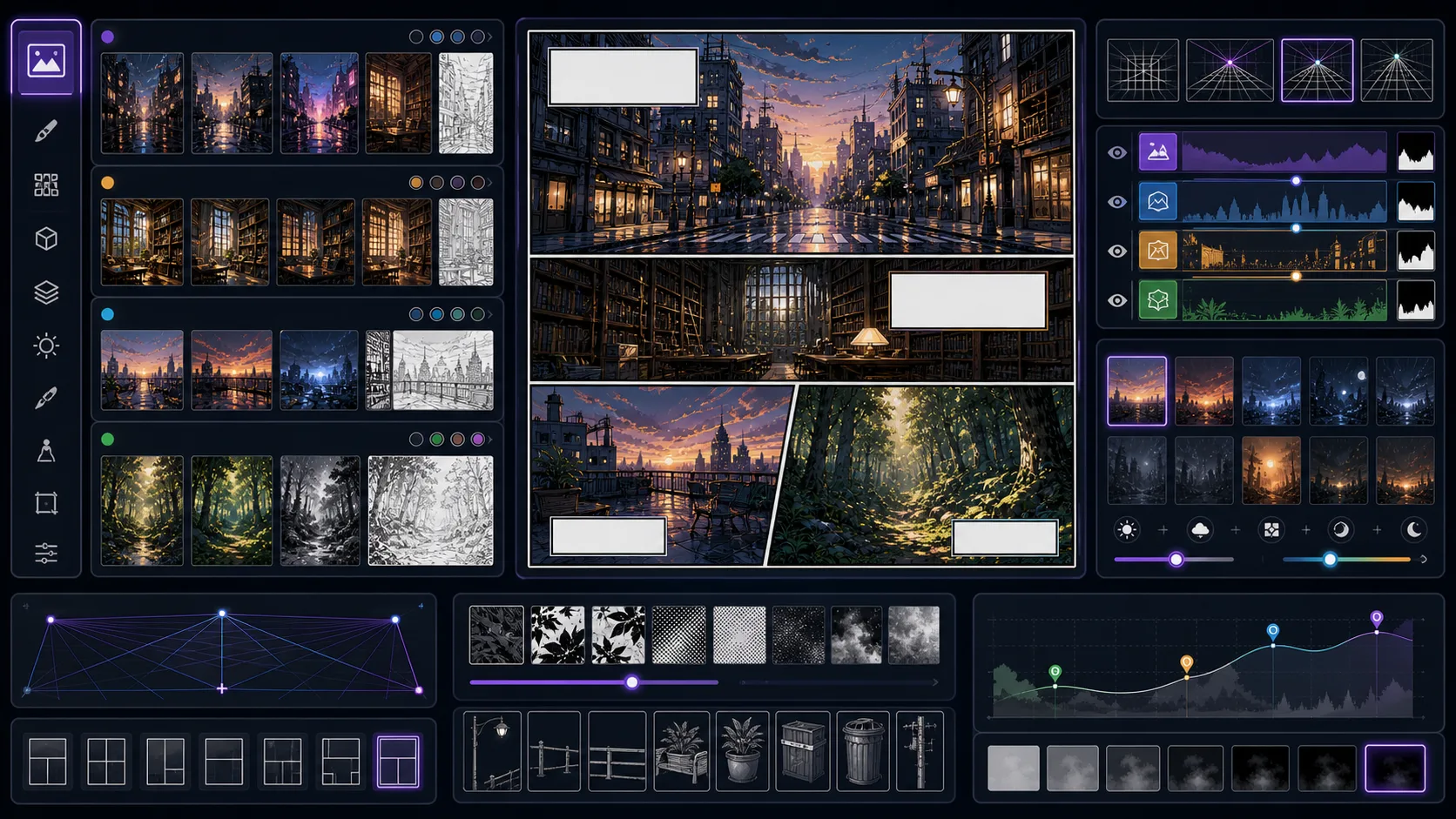
Do not ask for a whole project in one prompt. Ask for comic draft that helps creators building locations for panels and series worlds. A good brief names the deliverable, the visible subject, the emotional change, and the format. For this workflow, "a narrow bookstore alley background with warm windows and rain puddles" is more useful when it is tied to city streets, rooms, schools, fantasy locations, and establishing shots and a concrete review rule: design backgrounds with a clear foreground area for characters.
Protect the comic generation decision
Every tool here has a different creative pressure. In Comic Background Generator, the pressure is test a visual story idea quickly while keeping enough structure for revision. That means the prompt should prioritize story clarity, character intent, composition, text space, and whether the result can connect to another panel before extra polish. A beautiful result is still weak if it fails the decision the workflow was built to make.
Turn invisible story into visible signals
Backstory, mood, and theme only help when they change something the reader can see. Translate hidden ideas into posture, crop, lighting, props, wording, panel height, or negative space. This protects the tool from the common failure where the model may produce an attractive image that does not function as part of a comic sequence.
Compare versions with one test rule
Use the same test prompt when comparing styles or settings. Change only one thing at a time, then judge against design backgrounds with a clear foreground area for characters. This makes the result easier to discuss with collaborators because the debate moves from taste to observable evidence.
Document the useful part
When a result works, write down why. Note the prompt phrase, the crop, the style detail, and the limitation. For Comic Background Generator, the useful part is usually not the whole image; it may be the silhouette, the line break, the scroll timing, the character anchor, or the panel role.
Stop when the draft has a job
The goal is not endless regeneration. Stop when the output can become the next asset in the chain: turn the strongest draft into a panel, page plan, caption pass, character reference, or cover direction. That habit keeps the tool connected to real comic production instead of turning the workflow into a gallery of unrelated experiments.