ComicsAI Content Safety Upgrade: Clearer Boundaries for AI Comic Creation
ComicsAI has strengthened its content safety process with multilingual screening, contextual review, clearer user messages, and traceable timing before generation continues.

ComicsAI Editorial Team
Editorial Team
A clearer safety boundary for creative work
AI comic creation should feel open and expressive, but creative freedom works best when the boundaries are clear. A single request can combine characters, dialogue, camera direction, clothing, emotion, and story context. That same flexibility can also create requests that should not be sent to a generation service.
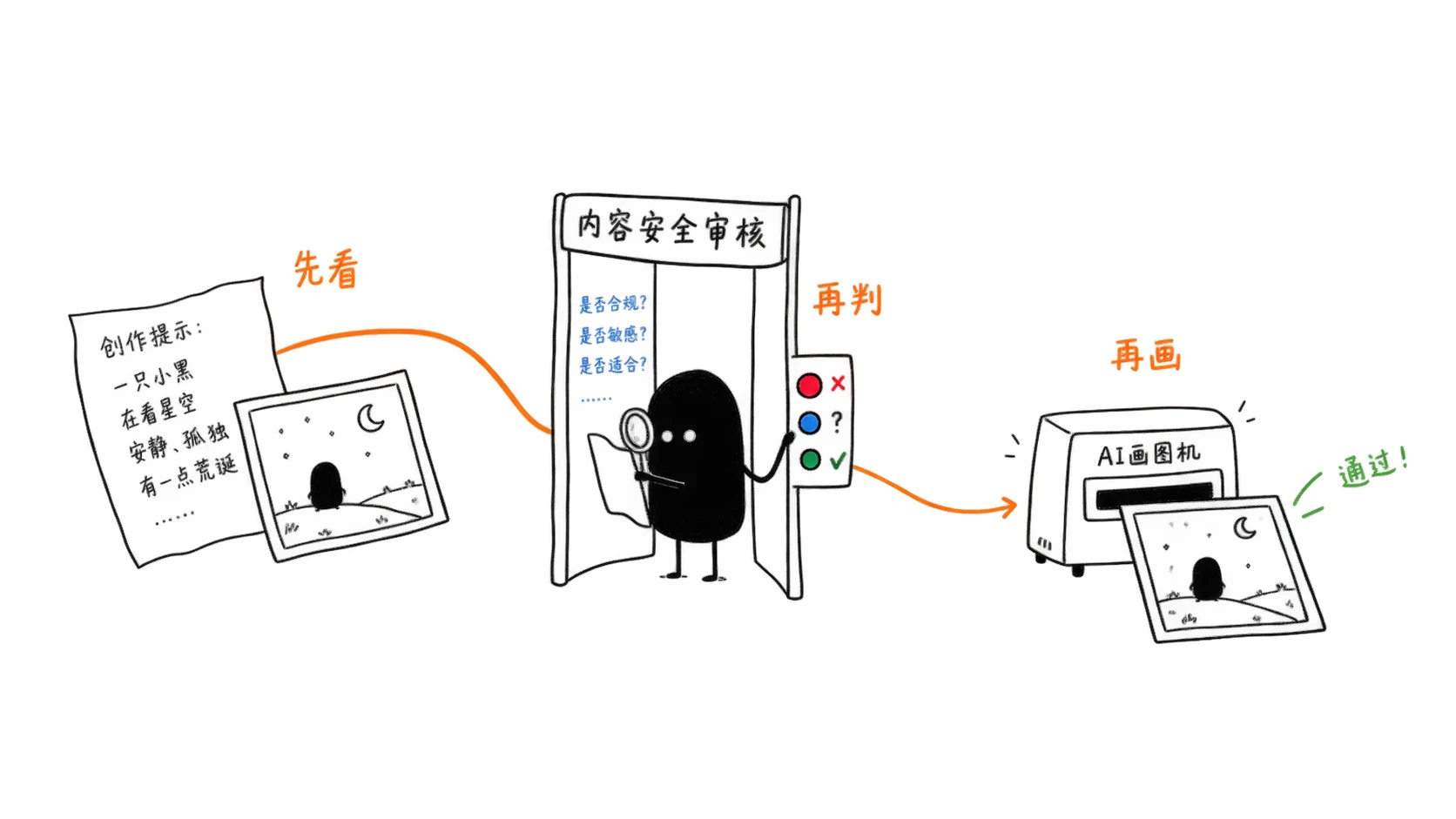
ComicsAI has upgraded content safety from a single hidden check into a visible part of the creation experience. Before generation continues, a request receives a multilingual basic screen and, when needed, a contextual review. The goal is simple: identify clear risks early, handle uncertain context carefully, and give creators a more understandable result when a request cannot continue.
In one sentence: ComicsAI reviews a request before generation, combines fast multilingual screening with contextual judgment, and records the decision and timing for reliable follow-up.
How the upgraded process works
The safety process has two complementary stages. The first is fast and consistent. The second looks at the meaning of the request as a whole. Keeping these roles separate helps avoid both obvious misses and overly broad keyword blocking.
1. A multilingual basic screen
The first screen checks for clear high-risk language across the main languages supported by ComicsAI. It also handles common formatting changes, such as differences in spacing, punctuation, or character forms.
This stage is intentionally narrow. It is designed to stop clearly prohibited requests quickly, not to treat every sensitive word as a violation. Ordinary romance, health education, non-sexual anatomy education, and normal story conflict still need to be understood in context.
2. A contextual review when meaning matters
If a request does not match a clear rule, a text-based review considers the surrounding context. It looks at how the characters, setting, actions, and framing work together rather than relying on one word in isolation.
This distinction matters for both safety and fairness. A request can appear ordinary at first glance but become high-risk when age, setting, and sexualized behavior are combined. Another request may mention a sensitive topic for an educational or non-sexual purpose and should not be rejected without considering that context.
What happens before generation
The public-facing flow is straightforward:
- A creator submits a prompt and generation settings.
- ComicsAI performs the safety review before generation continues.
- A clear policy violation is stopped and explained with a safety message.
- A request that passes can continue to the selected creation workflow.
- The task keeps a record of the review result and elapsed time.
This gives creators an earlier explanation and gives the team a more useful record than a generic “generation failed” message. It also keeps safety review time visible instead of hiding it inside the total task duration.
When a safety service is temporarily unavailable
Safety services can experience timeouts, temporary outages, or invalid responses. A temporary service issue is different from a content violation, so ComicsAI records it separately and follows the current availability policy rather than presenting it as a policy decision.
The basic screen remains an independent first line of protection. Clear, high-confidence risks can still be stopped even when contextual review needs to be retried or temporarily skipped. The task record keeps the event and its timing available for follow-up.
This is an evolving product policy. We will continue to review the balance between availability and safety as we learn from real usage, false-positive reports, and multilingual edge cases.
What the task record shows
Administrators can review the safety history from the task details page. The record focuses on information that helps explain what happened:
- whether the request was allowed to continue;
- the broad risk result;
- which kind of review was completed;
- how long the review took;
- the total time spent on safety review and the complete task duration.
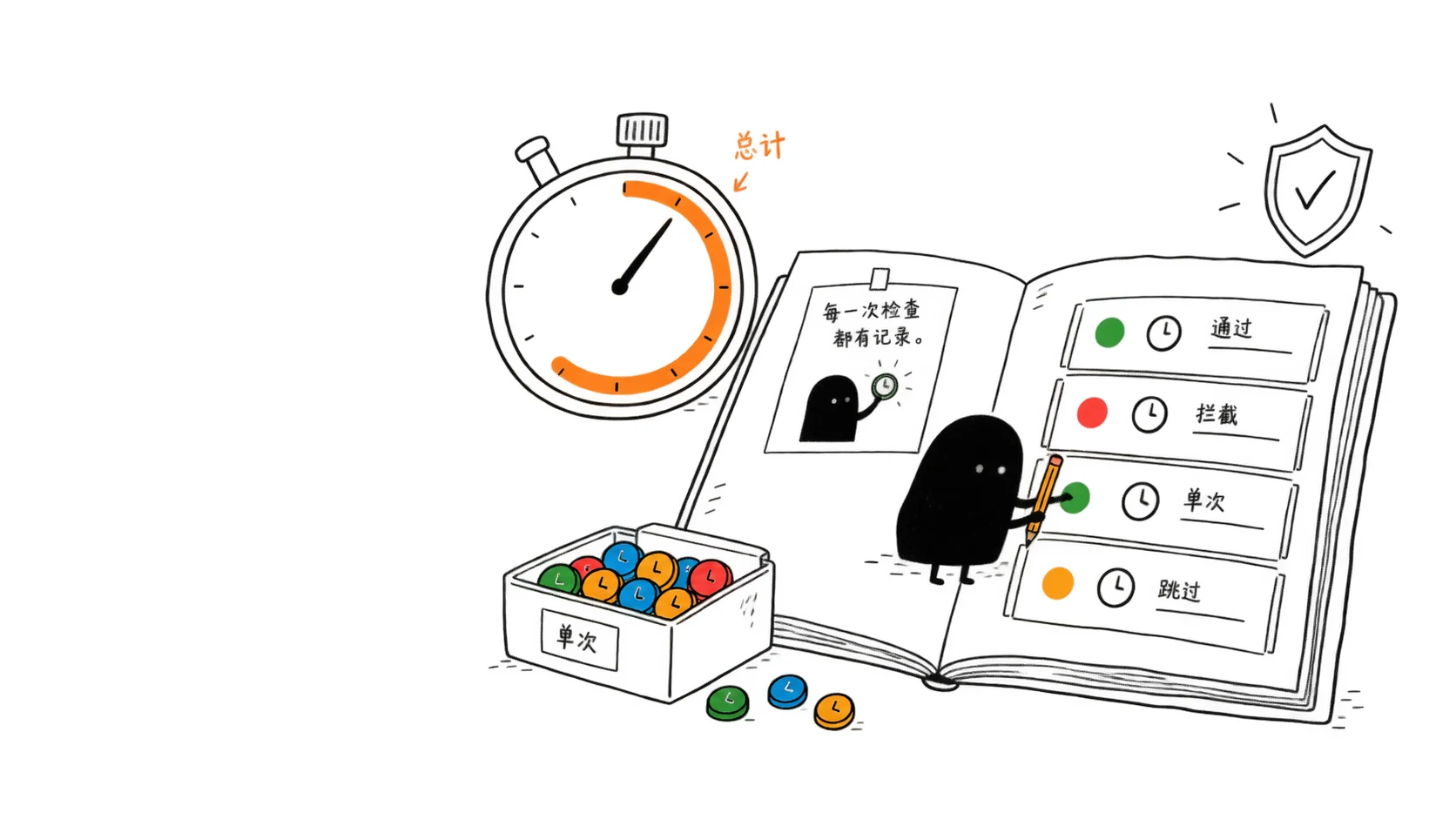
The goal is operational clarity: creators get a clearer message, while administrators can distinguish a policy stop, a temporary service issue, and a later generation problem.
Why this matters for creators
For teams using Comic Translator, AI Comic Maker, or other ComicsAI tools, a predictable safety process makes creative work easier to plan:
- clear boundaries reduce avoidable retries;
- contextual review helps protect legitimate educational and narrative use cases;
- timing records make slow steps easier to investigate;
- consistent messages make it easier to revise a prompt responsibly.
The policy is designed to protect people without turning creative work into an unexplained list of prohibitions. We will keep improving the language of safety messages, the handling of edge cases, and the review of false positives and false negatives.
A practical, explainable safety policy
Our approach follows a simple principle: use clear rules for clear risks, use context when context matters, and keep enough information to explain the result later. That direction is consistent with the risk-management focus of the NIST AI Risk Management Framework and the application-layer safeguards discussed in the OWASP Top 10 for Large Language Model Applications.
We do not present one automated judgment as infallible. Safety is a product responsibility that needs policy review, operational monitoring, creator feedback, and continued improvement.
Frequently asked questions
Why can a normal-looking request still receive a safety review?
Because the system considers context as well as individual words. A request can become risky when age, setting, actions, or framing are combined. Contextual review helps separate legitimate creative or educational uses from requests that cross a safety boundary.
Will a temporary safety-service issue always stop generation?
No. A temporary service issue is recorded separately and handled under the current availability policy. Clear high-confidence risks are still handled by the basic screen, while uncertain cases may need to be retried or reviewed again.
Does safety review add time?
It adds a measurable step, and that time is recorded separately from the complete task duration. This helps us improve the balance between safety, clarity, and speed.
Are credits refunded when a request is blocked?
Under the current policy, requests explicitly blocked by content safety are generally not refunded. Duplicate charges, billing errors, undelivered paid access, and rights required by law are handled according to the Refund Policy.
Where can administrators see the review history?
Open a task from the admin task list and select its details view. The panel shows the safety result, broad risk information, review timing, total safety-review time, and complete task duration.
If you are creating comics, Webtoon episodes, or translated pages with ComicsAI, start from the ComicsAI tools page and choose the workflow that fits your project.
ComicsAI Editorial Team
Editorial Team
"The ComicsAI editorial team publishes practical guidance on AI comic workflows, tools, and responsible creative practices."