Nano Banana 2.1 for Comics: Strengths, Limits and GPT Image 2.5 Compared
What Nano Banana 2.1 can do for comic panels and manga pages: Google’s model-card scores, known limits at 1K, independent tests, Arena rankings and how it compares with GPT Image 2.5 on ComicsAI.

ComicsAI Editorial Team
Editorial Team
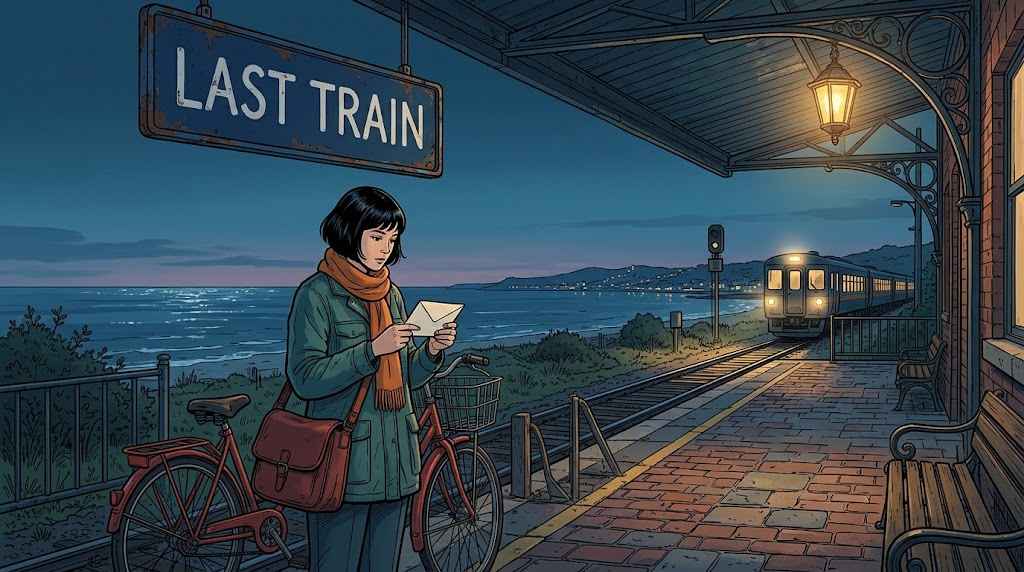
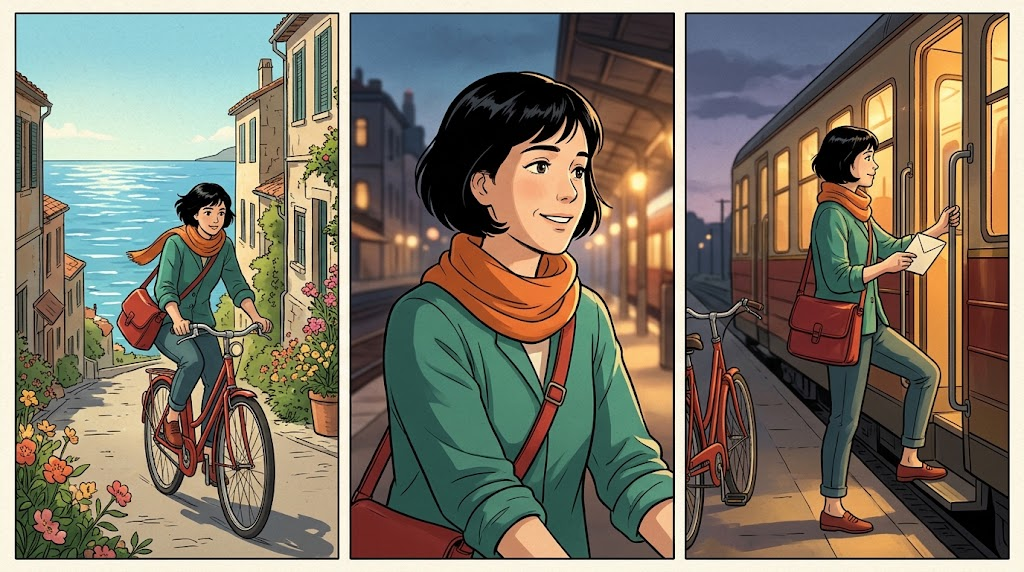
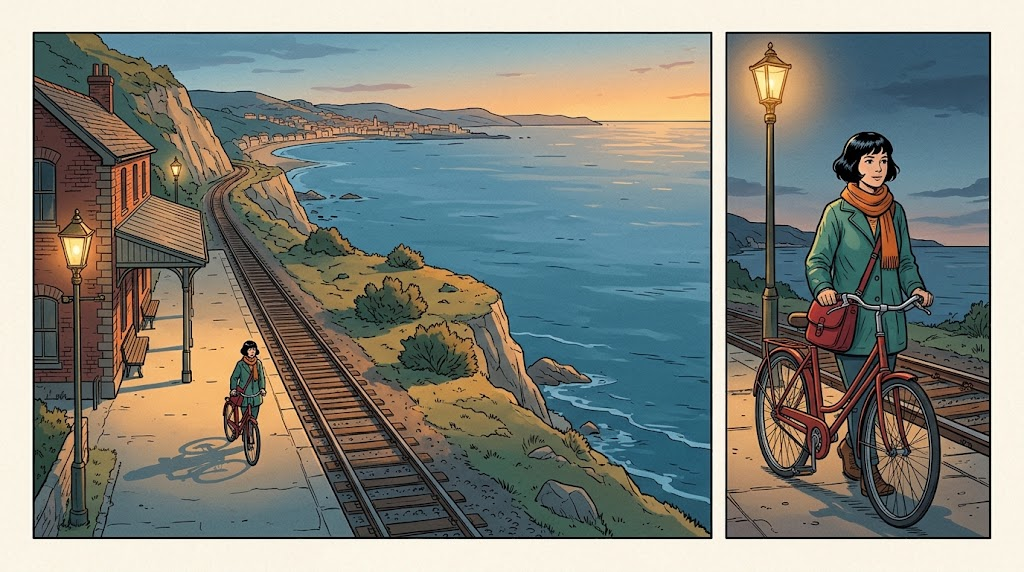
Cover and section images: ComicsAI editorial illustrations. They are not Nano Banana 2.1 test outputs or benchmark results.
Nano Banana 2.1 is now the default model for free image generation on ComicsAI. This guide covers what matters for comics: what Google says the model improved, its known limitations, what independent testers found, and when GPT Image 2.5 is the better choice. Each claim names its source. Where the sources disagree, we say so.
The short version
- What it is: Google’s
gemini-nano-banana-2.1, generally available since 6 October 2026. It updates Nano Banana 2 (Gemini 3.1 Flash Image) and is built on Gemini 3.6 Flash. - Where it is strongest for comics: keeping several characters consistent and handling stylised art. Google’s own human-preference scores rate it above both Nano Banana 2 and Nano Banana Pro here.
- Where it slips: small or long text, which Google says is often blurry at 1K. It also sometimes mixes up left and right, and character identity is not guaranteed.
- Against GPT Image 2.5: independent tests are close on lettering and character continuity. Public leaderboards still rank GPT Image 2.5 higher overall.
- On ComicsAI: free generation uses Nano Banana 2.1 at 1K from a text prompt, in square, 3:2 landscape or 2:3 portrait. Reference images and editing need paid access.
What Nano Banana 2.1 is
Google describes Nano Banana 2.1 as an update to Nano Banana 2 that keeps Flash-level speed and cost. Google says it improves visual quality, prompt adherence, multi-turn character consistency and text rendering. Google positions it as the more efficient counterpart to Nano Banana Pro (Gemini 3 Pro Image). The specifications most relevant to comics:
| Specification | Nano Banana 2.1 (Google documentation) | On ComicsAI today |
|---|---|---|
| Output resolution | 1K, 2K, 4K (1K ≈ 1 megapixel) | 1K |
| Aspect ratios | 14 ratios, from 1:1 and 3:2 to 21:9 and 1:8 | 1:1, 3:2, 2:3 |
| Reference images | Up to 14; up to 4 characters and 10 objects | Paid access only |
| Thinking | Minimal, medium (default), high | Google’s default |
| Search grounding | Google web and image search | Not used |
| Transparent background | Not supported in CellCog’s API test (JPEG on white) | Not available |
Google’s image guide includes a “sequential art” pattern for comic panels and storyboards. It builds a strip from a character description or reference image plus a style, for example “Make a 3 panel comic in a gritty, noir art style”. So multi-panel comics are a documented use case, not only something users found by experiment.
What Google’s model card says about comic-relevant skills
The DeepMind model card publishes Elo scores from side-by-side human evaluations. These are Google’s internal tests, and OpenAI models are not included. They are still the most detailed public data on character work:
| Capability (Elo, higher is better) | Nano Banana 2.1 (Thinking) | Nano Banana 2 (Thinking) | Nano Banana Pro |
|---|---|---|---|
| Overall text-to-image preference | 1050 ± 14 | 990 ± 7 | 935 ± 8 |
| Single-character consistency | 1028 ± 14 | 981 ± 10 | 991 ± 9 |
| Multi-character consistency | 1106 ± 14 | 978 ± 10 | 1011 ± 10 |
| Stylization | 1062 ± 20 | 991 ± 12 | 990 ± 12 |
| Multi-reference editing | 1066 ± 22 | 988 ± 13 | 989 ± 12 |
The largest gain is multi-character consistency, which matters most for comics: 128 points over Nano Banana 2 and 95 over Pro. With thinking turned off, 2.1 still scores 1068 on that test. So the gain does not come from reasoning time alone.
The limitations that matter on a comic page
The same model card lists known weaknesses. Here they are as practical comic advice:
- Lettering. Google lists “poor text rendering in small text (often blurry in 1k model), long paragraphs, page length”. ComicsAI’s free route runs at 1K, so ask for short, large text: a sign, a title, one or two words in a bubble. Add full dialogue in an editor afterwards.
- Identity across images. “Character consistency is not always perfect between input images and generated output image.” Check hair, clothing, colours and props on every new panel before you accept it.
- Left and right. Google notes “occasional confusion around spatial localisation (e.g. left/right)”. If blocking matters, such as who stands on which side or which hand holds the letter, check it first.
- Edits keep the old pose. When editing, the model sometimes keeps the pose of the input image. If you need a new pose, a fresh generation can work better than an edit.
What independent tests found
No standard benchmark tests comics or manga pages yet. The closest evidence is a handful of published hands-on tests, each with small samples and different settings:
| Tester | Setup | Comic-relevant result |
|---|---|---|
| Analytics Vidhya | Google AI Studio; four tasks, including a three-panel comic | Panels, speech bubbles and the programmer’s look stayed consistent. The small typo drawn on the laptop screen was not readable. |
| CellCog | 24 prompts; Nano Banana 2.1 at 2K vs GPT Image 2.5 at high quality | Character consistency was a tie. Both kept a courier’s face, hair, jacket and bag across three scenes, but Nano added a storefront sign nobody asked for. Lettering was a near tie. Overall, GPT won 9 prompts, Nano 5, and 10 were ties. |
| Atlas Cloud | Four briefs; Nano at 2K vs GPT Image 2.5 Flare and Sunburst at high quality; one attempt each | Nano won or shared three of four rounds when each was scored against its written brief, including keeping a requested portrait poster layout. |
| DomoAI | 13 tasks, two outputs per model, 2K, Chinese prompts | Short Chinese poster text was correct. Nano 2.1 met more requirements in a layout-heavy illustrated poster, but missed a requested cup in both six-character group scenes. |
| Astorie | A three-character campaign built from character sheets | On the first pass, Nano 2.1 showed identity drift in all three characters. Nano Banana 2 kept the reference more faithfully. Targeted corrections repaired single-character identity. |
| Fuser | Five tasks, one run each; Nano at 2K vs GPT Image 2.5 Flare | Nano was preferred on a product shot and Flare on a character-reference task; poster text was a tie. |
Together they suggest three points. Text-only panels hold a character’s look well across a short sequence. Groups and reference-driven work are less reliable on the first try. Fine text is the weakest area, especially at lower resolutions. None of these tests ran at ComicsAI’s exact 1K setting, so read them as guides to what to check, not as predictions.
Nano Banana 2.1 vs GPT Image 2.5
Public leaderboards rank GPT Image 2.5 higher. CellCog read these scores on 25 October 2026:
| Leaderboard | GPT Image 2.5 Sunburst | GPT Image 2.5 Flare | Nano Banana 2.1 |
|---|---|---|---|
| Arena text-to-image | 1,425 | 1,398 | 1,328 |
| Arena single-image edit | 1,514 | 1,481 | 1,426 |
| Artificial Analysis text-to-image | 1,222 (1st) | 1,207 (2nd) | 1,176 (4th) |
Two caveats apply. Arena scores are crowd preferences for general images, not comic tasks. Nano Banana 2.1 also had far fewer votes early on. Atlas Cloud counted 5,310 votes against 17,752 for Sunburst, and the entries were marked preliminary. Google’s model card shows 2.1 beating every Google model it lists, but it has no OpenAI column. Neither scoreboard tells you which model draws your panel better.
Use this task-by-task guide for comic work on ComicsAI:
| What you are making | Better starting point | Why |
|---|---|---|
| First panels, thumbnails, storyboard drafts | Nano Banana 2.1 (free) | Strong style and consistency scores; free credits apply |
| A short sequence with recurring characters | Nano Banana 2.1, then review each panel | Highest multi-character score in Google’s tests; independent tests show drift is still possible |
| A sign, title or one-word sound effect | Either; proofread | Independent tests call lettering a near tie |
| Dense dialogue or captions | Neither; letter it afterwards | Google says small and long text blurs, especially at 1K |
| Editing an existing panel while keeping its framing | GPT Image 2.5 (paid) | CellCog found Nano reframed every edited photo; GPT kept the frame |
| Character art on a transparent background | GPT Image 2.5 (paid) | CellCog got only JPEG on white from Nano Banana 2.1 |
On ComicsAI, GPT Image 2.5 Sunburst runs at Medium quality and is part of paid access. That includes image editing and generation from reference images.
Which canvas should I choose?
ComicsAI maps the canvas to an aspect ratio: square is 1:1, landscape is 3:2 and portrait is 2:3. At 1K, each image has about one megapixel. A full four-panel page in one image gives each panel only a fraction of that, so faces and lettering get small. That is where Google warns quality drops. For pages, generate one panel per image and assemble the page in Storyboard Generator. Ask for a whole strip in one image only for quick layout tests.
Two prompts built around the limits
These are ComicsAI editorial prompts, written to avoid the known weak spots. They are not benchmark results.
A single panel with a short sign
One landscape comic panel. An adult courier with a short black bob, teal jacket, orange scarf and red shoulder bag stops beside a red bicycle outside a railway station at dusk. Medium shot, eye-level camera, clean ink lines and warm window light. One large sign reads ‘LAST TRAIN’. No dialogue; leave empty space above the courier for a caption. No extra characters.
The next panel, with the same identifiers
One landscape comic panel in the same clean ink style. The same adult courier — short black bob, teal jacket, orange scarf, red shoulder bag — hands a cream envelope to an elderly bookshop owner across a wooden counter. The courier stands on the left, the owner on the right. Three-quarter view, afternoon window light. No text.
Then check four things: the identifiers (hair, jacket, scarf, bag), who stands on which side, the number of people, and any extra text the model added. Change one instruction at a time. Start in Try Free. Keep a reusable character sheet to check against.
Questions before you start
Is Nano Banana 2.1 free on ComicsAI?
It is the default model for free credits. The free trial gives one credit per account and is open to the first 1,000 users each day, so it is not unlimited. Editing and reference-based generation need paid access. See pricing.
Can I get 2K or 4K here?
Not at the moment. Google supports 2K and 4K, but ComicsAI’s Nano Banana 2.1 route generates at 1K.
Can it draw a whole manga page in one image?
It can draw multi-panel layouts, and Google documents comic strips as a use case. At 1K, though, each panel gets only part of about one megapixel, and Google warns that small text blurs. For pages you will publish, generate panel by panel and add the lettering yourself.
Will it keep my character consistent across a chapter?
Google’s scores put 2.1 ahead of earlier Nano Banana models on single- and multi-character consistency. Independent tests still found drift, especially with groups. Repeat the same visible identifiers in every prompt and check each panel. Paid reference-image workflows help but do not guarantee consistency.
Is Nano Banana 2.1 better than GPT Image 2.5?
It depends on the task. Public leaderboards rank GPT Image 2.5 higher overall. Independent tests call lettering and character continuity close. GPT Image 2.5 is better at preserving framing during edits and can output transparent backgrounds. For free drafting on ComicsAI, start with Nano Banana 2.1.
Sources
Reviewed on 3 November 2026. Model-card scores are Google’s internal evaluations. Third-party tests used their own settings, usually 2K, which differ from ComicsAI’s 1K route.
- Google DeepMind: Nano Banana 2.1 model card (evaluations and limitations)
- Google Cloud: Nano Banana 2.1 specifications
- Google AI: Nano Banana 2.1 model overview
- Google AI: image generation guide (sequential art)
- CellCog: GPT Image 2.5 vs Nano Banana 2.1, 24 prompts
- Atlas Cloud: Nano Banana 2.1 vs GPT Image 2.5 and Arena scores
- Analytics Vidhya: Nano Banana 2.1 review
- DomoAI: Nano Banana 2.1 vs Nano Banana 2, 13 tests
- Astorie: Nano Banana 2.1 multi-character campaign review
- Fuser: five-task comparison with GPT Image 2.5 Flare
- OpenAI: GPT Image 2.5 Sunburst
ComicsAI Editorial Team
Editorial Team
"ComicsAI editors explain product changes and practical comic creation workflows using documented sources."