Turn adjectives into evidence
Words like tense, magical, lonely, or dangerous need visible proof: posture, weather, props, lighting, distance, or expression.
Story Tools
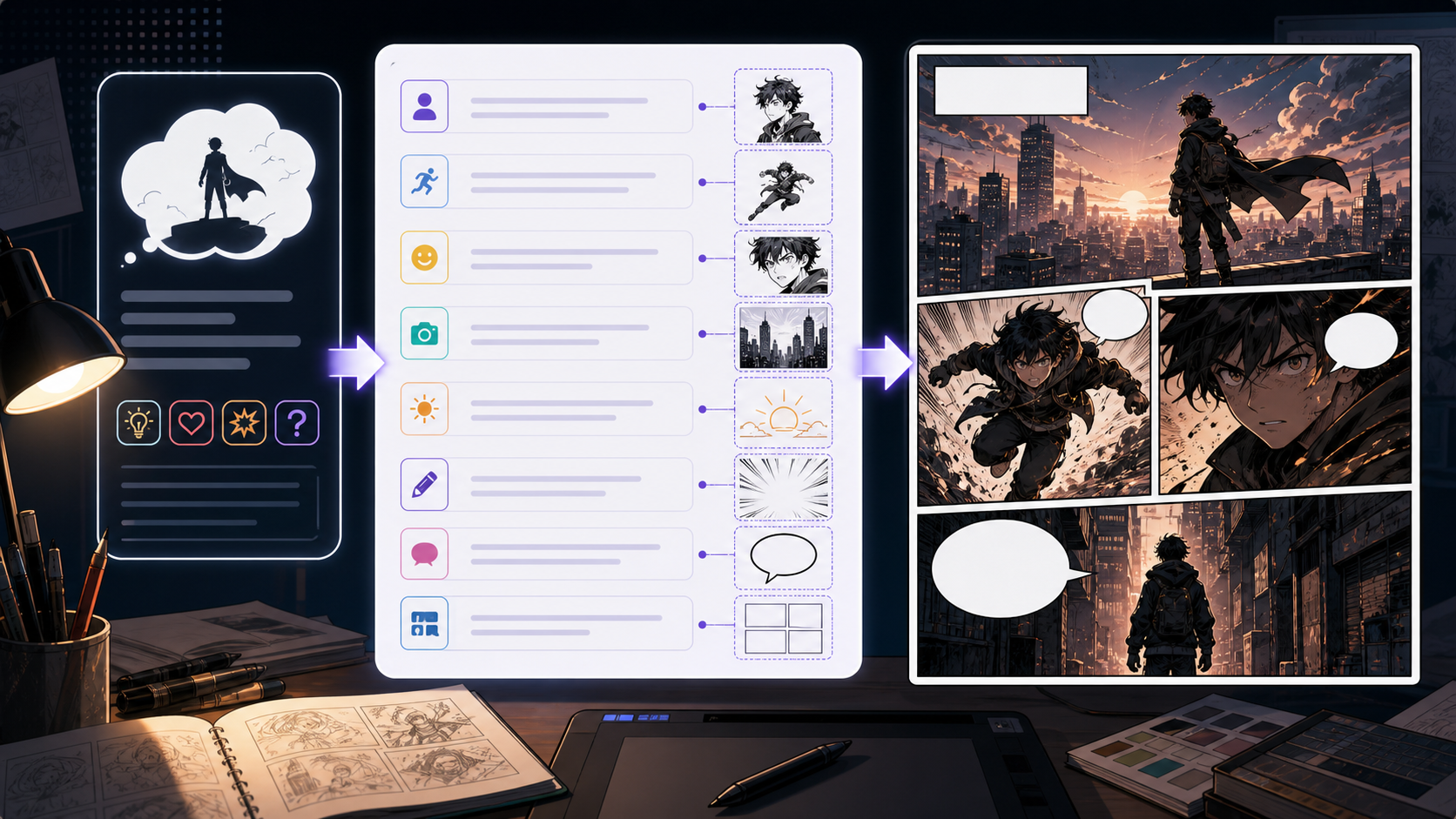
Comic Prompt Generator helps turn vague ideas into precise panel directions with subject, action, camera, mood, style, and production constraints.
Practical take
A good prompt is a production instruction. It tells the model what must be visible and gives the creator a standard for judging the result. Use this workflow when the idea is clear but the prompt keeps producing random or unfocused images.
The weak prompt usually lists adjectives. The stronger prompt defines the panel job, visible action, focal point, style, and what should be left open for captions or dialogue.
Workflow
Prompt writing should turn intention into visible evidence.
Decide what the image must do for the reader.
Turn fear, guilt, hope, or danger into posture, lighting, object choice, or expression.
Specify close-up, wide shot, overhead, low angle, or insert when composition matters.
Tell the prompt what success looks like: clear focal point, text space, or character consistency.
Prompt craft
A useful Comic Prompt Generator prompt begins with the asset you need, not a list of style adjectives. Give the model a visible subject, the production role, and the review focus: voice, pacing, line length, scene logic, and whether the words leave room for the art to do work.
Subject + visible change + structured text role + prompt templates, style tests, character prompts, and scene briefs + subject, action, setting, emotion, camera, lighting, style, and output constraints + review rule: start from the reader effect, then add only the details that serve it.
make me a prompt
a prompt for a silent final panel after a magical tournament loss, designed for prompt templates, style tests, character prompts, and scene briefs, with subject, action, setting, emotion, camera, lighting, style, and output constraints; make the reader understand that start from the reader effect, then add only the details that serve it; leave clean space for later editing and keep the focal point clear.
The stronger version names the subject, the visible change, and the asset role. It also tells the tool what success looks like for writing and adaptation: voice, pacing, line length, scene logic, and whether the words leave room for the art to do work.
Quality signals
A useful comic prompt should make the output easier to judge. If you cannot tell why one result is better than another, the prompt is still vague.
The prompt should describe what can actually appear in the image.
Composition should be directed, not left entirely to chance.
Style words should support the story beat.
The prompt should include what the creator will check afterward.
Visual examples
Prompt examples are supported by images that show story clarity, style choice, and character consistency.
A strong comic prompt converts vague intent into visible subject, action, camera, mood, style, and review criteria.
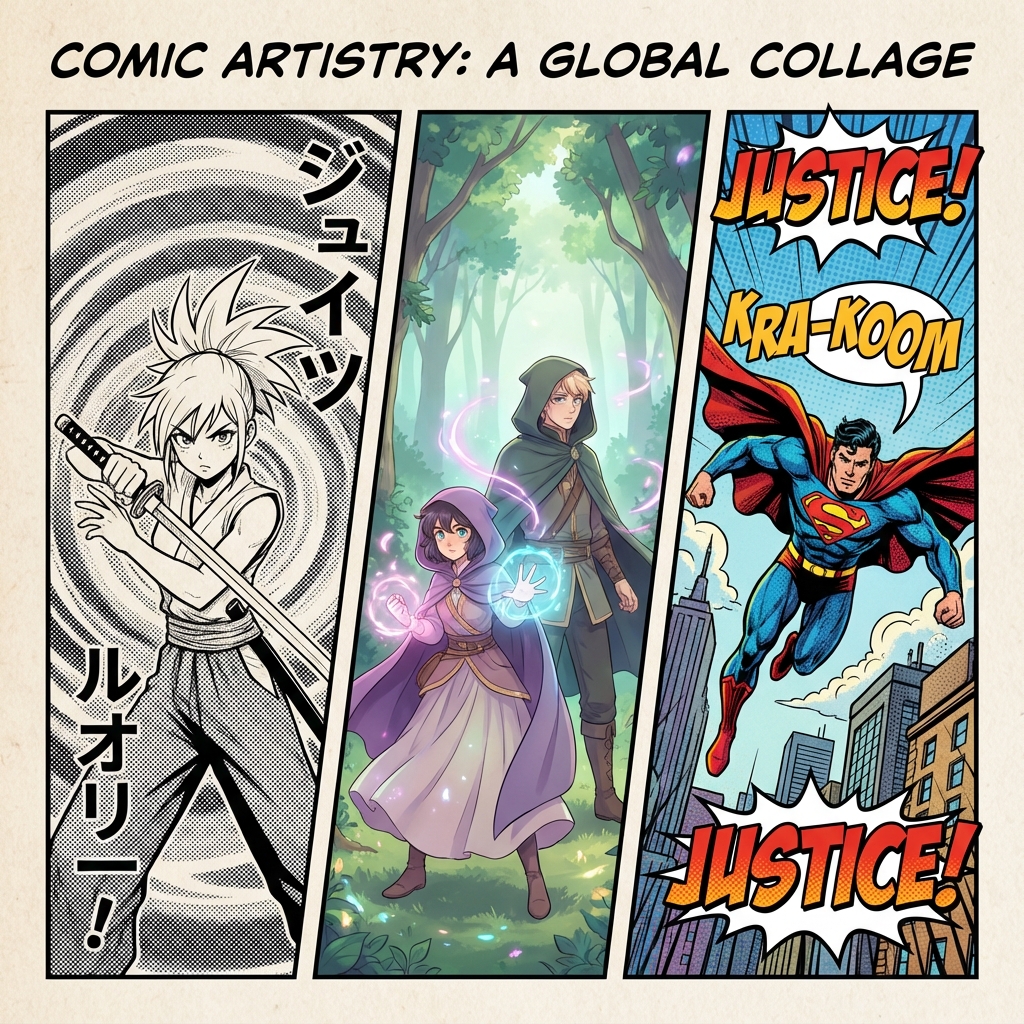
Style works best when it supports a specific panel job.
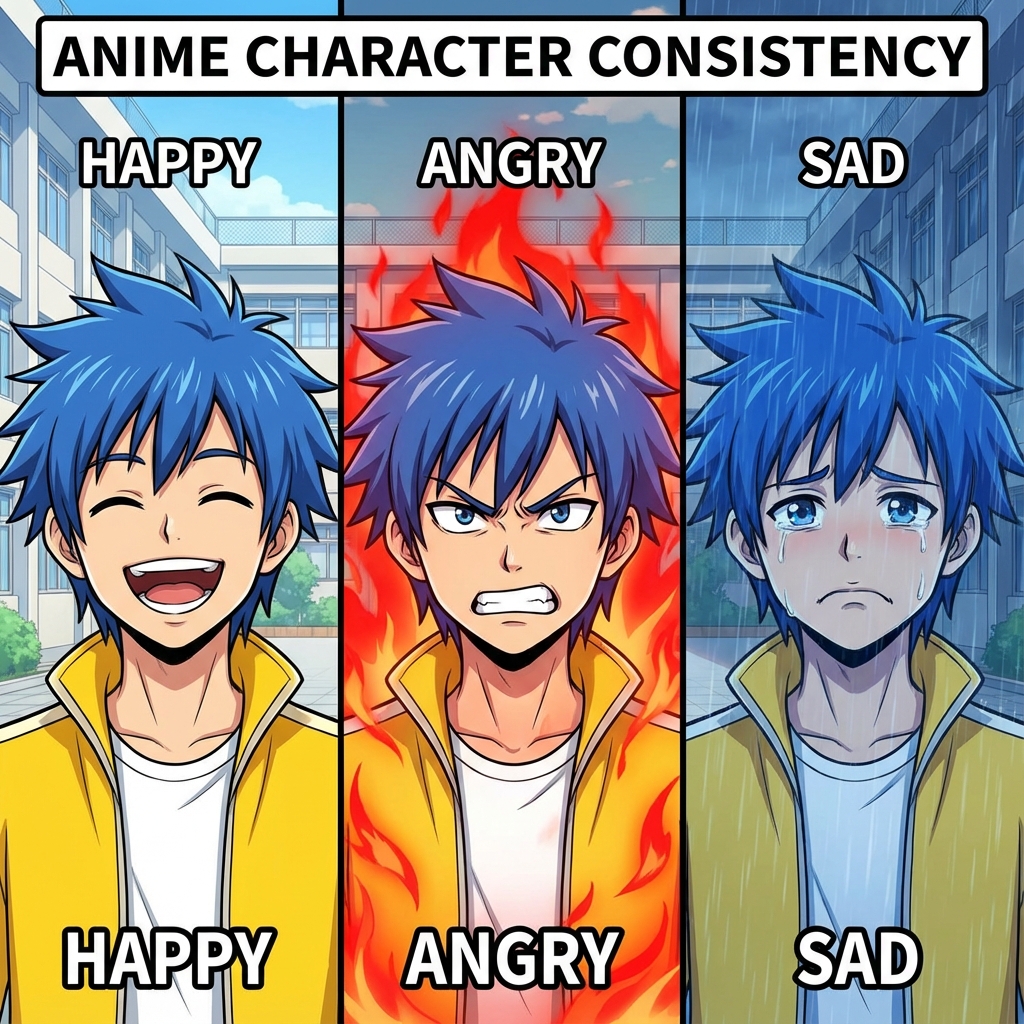
Repeatable character anchors make prompts more useful across a series.
Creator field guide
These notes help creators decide what to plan, what to ignore, and when a draft is ready for the next production step.
Words like tense, magical, lonely, or dangerous need visible proof: posture, weather, props, lighting, distance, or expression.
A prompt should say how the result will be judged: clear focal point, room for lettering, consistent character, or strong thumbnail read.
When testing, change one variable at a time. Otherwise you will not know whether the camera, style, or subject improved the result.
Field notes
Comic Prompt Generator should be about control. A weak prompt asks for a mood; a strong prompt describes visible evidence of that mood. The workflow should teach users to turn abstract adjectives into camera, posture, lighting, props, composition, and review rules.
The most useful prompt includes a success condition. Instead of only saying 'dramatic cyberpunk comic panel,' it should specify what the reader must notice, where text can go, and what detail should remain consistent. This gives creators a standard for choosing or rejecting outputs.
The workflow should also explain prompt testing. Creators should change one variable at a time: camera, mood, pose, background, or style. If everything changes at once, it becomes impossible to learn why one result worked better than another.
Prompt generation becomes more powerful when it saves reusable fragments. A creator may keep one block for character anchors, one for series style, one for camera language, and one for lettering constraints. The workflow should explain this modular approach because it helps users produce more consistent results across comic panels, covers, manga drafts, and webtoon scenes.
Turn a weak idea into a usable image direction.
Save reusable character, style, and composition phrases.
More style words do not fix an unclear panel job.
A prompt should say what makes the result worth keeping.
After the prompt is strong, use it in AI Comic Generator, Text to Comic AI, Manga Maker, or character tools.
A good prompt names the panel job, visible action, camera, mood, style, and production constraint.
They may rely on broad adjectives instead of visible actions and composition rules.
Detailed is useful only when the details affect the image. Remove backstory that cannot be shown.
Yes, if you repeat stable character anchors such as silhouette, outfit, colors, and props.