Give the OC a contradiction
A memorable original character often combines two pressures: shy but reckless, elegant but broke, cheerful but haunted. That tension makes design choices less generic.
Character Tools
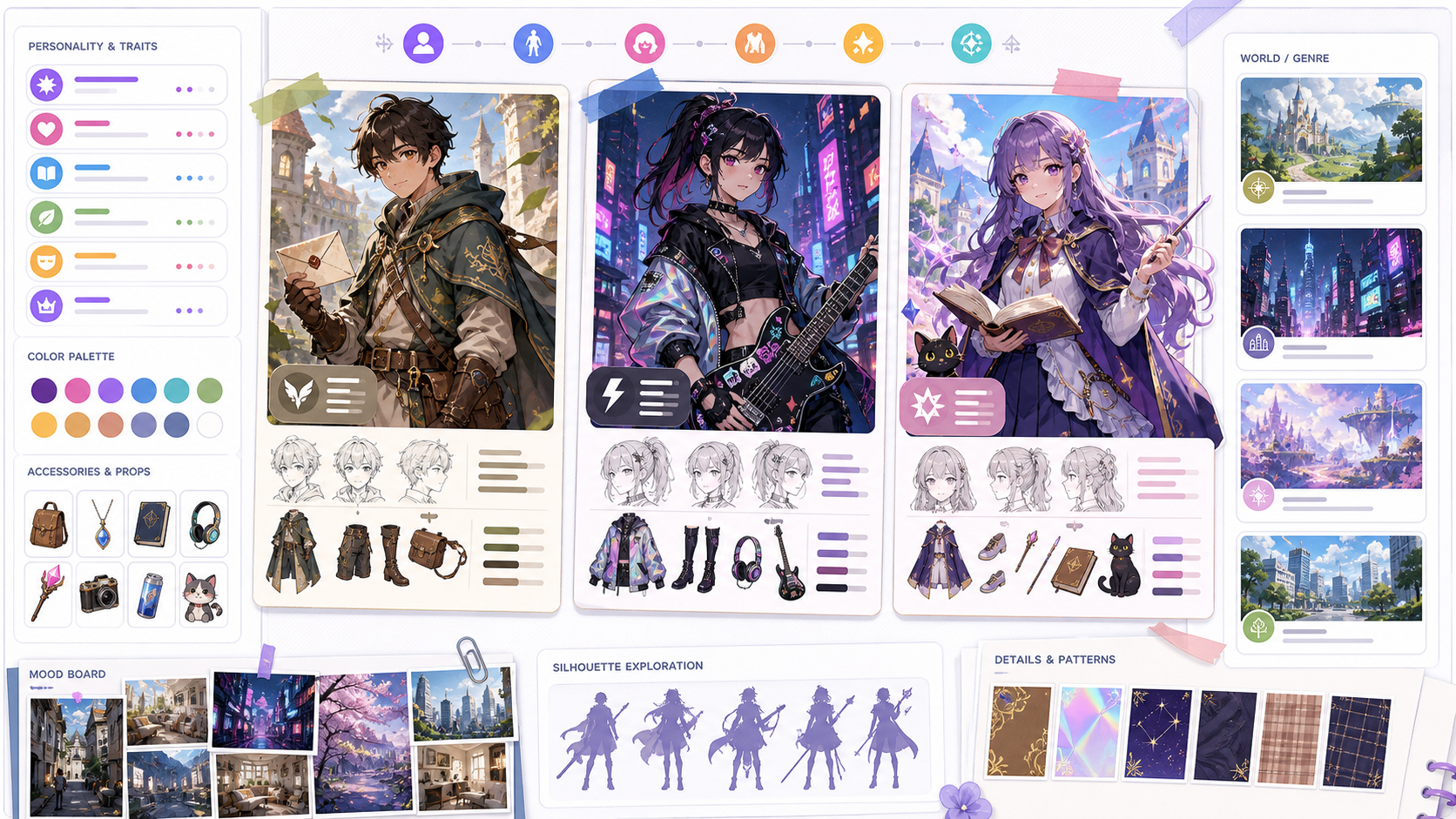
OC Maker helps create original characters with story role, visual identity, personality cues, and genre fit. It is designed for fan creators, comic writers, roleplayers, and artists building a cast from scratch.
Practical take
An OC works when the design suggests a life beyond the image. Use this workflow to connect personality with visible choices: posture, outfit, prop, color, expression, and the kind of scenes the character belongs in.
The weak OC prompt is only a list of aesthetics. A stronger OC brief explains role, contradiction, motivation, and how those ideas show up visually.
Workflow
OC creation should balance story identity with visual repeatability.
Decide what the character does in the story or world before choosing fashion details.
A shy fighter, cheerful ghost, or elegant mechanic gives the design more tension.
Turn personality into props, posture, colors, scars, accessories, or clothing structure.
Write a short profile that includes both personality and visual anchors.
Prompt craft
A useful OC Maker prompt begins with the asset you need, not a list of style adjectives. Give the model a visible subject, the production role, and the review focus: silhouette, outfit logic, face shape, color anchors, expression range, and repeatable props.
Subject + visible change + character reference role + anime OCs, manga OCs, fandom-inspired OCs, and original cast members + role, power, flaw, costume anchor, expression, and world fit + review rule: give the character a want, a visible anchor, and one limitation.
make my OC
an academy healer OC who is terrified of blood but carries antique silver scissors, designed for anime OCs, manga OCs, fandom-inspired OCs, and original cast members, with role, power, flaw, costume anchor, expression, and world fit; make the reader understand that give the character a want, a visible anchor, and one limitation; leave clean space for later editing and keep the focal point clear.
The stronger version names the subject, the visible change, and the asset role. It also tells the tool what success looks like for character design: silhouette, outfit logic, face shape, color anchors, expression range, and repeatable props.
Quality signals
A good OC should be recognizable, promptable, and easy to place in scenes.
The character should imply a conflict, dream, secret, or role.
At least three design details should be easy to repeat.
The OC should look like they belong in the intended world.
You should be able to imagine the character acting, not only posing.
Visual examples
OC references are selected for personality signals: prop, genre, silhouette, and world fit.
A strong OC concept connects role, contradiction, visible symbols, outfit logic, and world fit instead of stopping at a portrait.
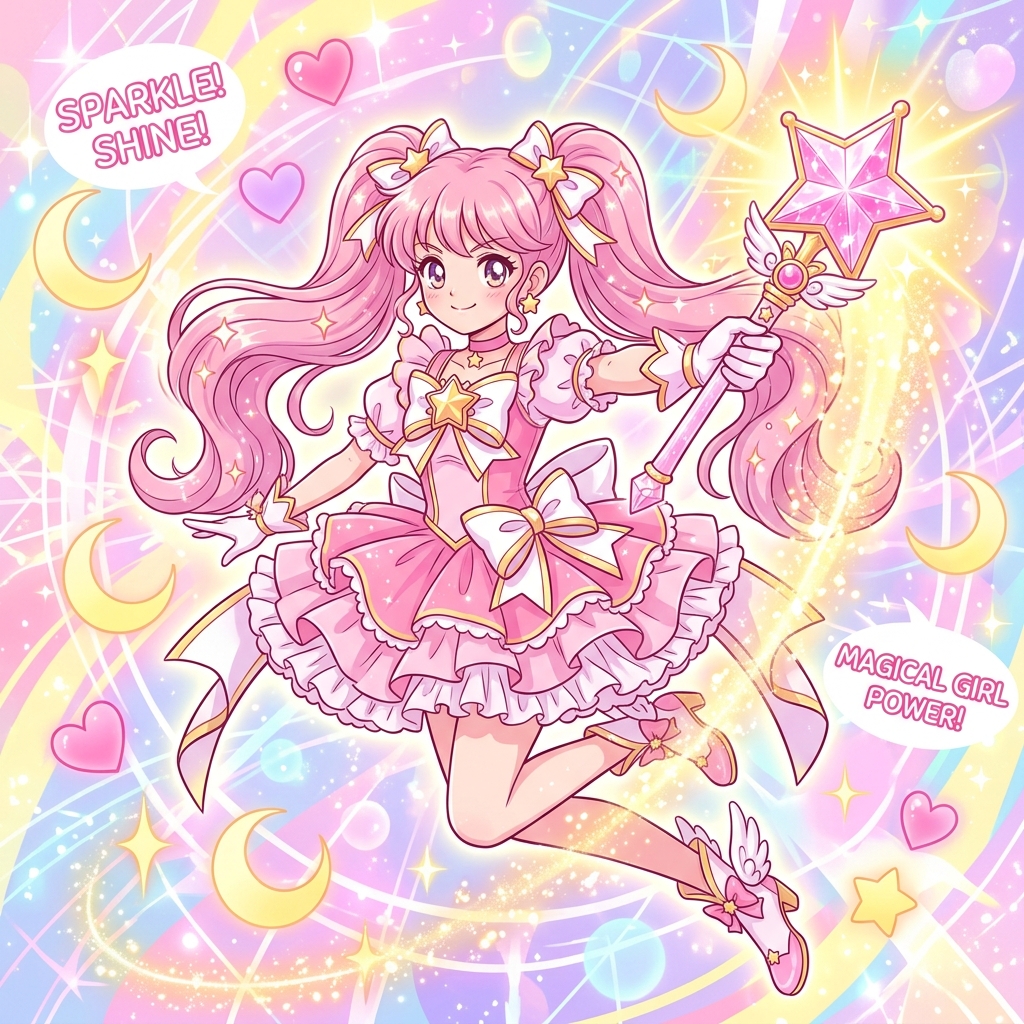
Genre cues help an OC feel like they belong in a specific story world.
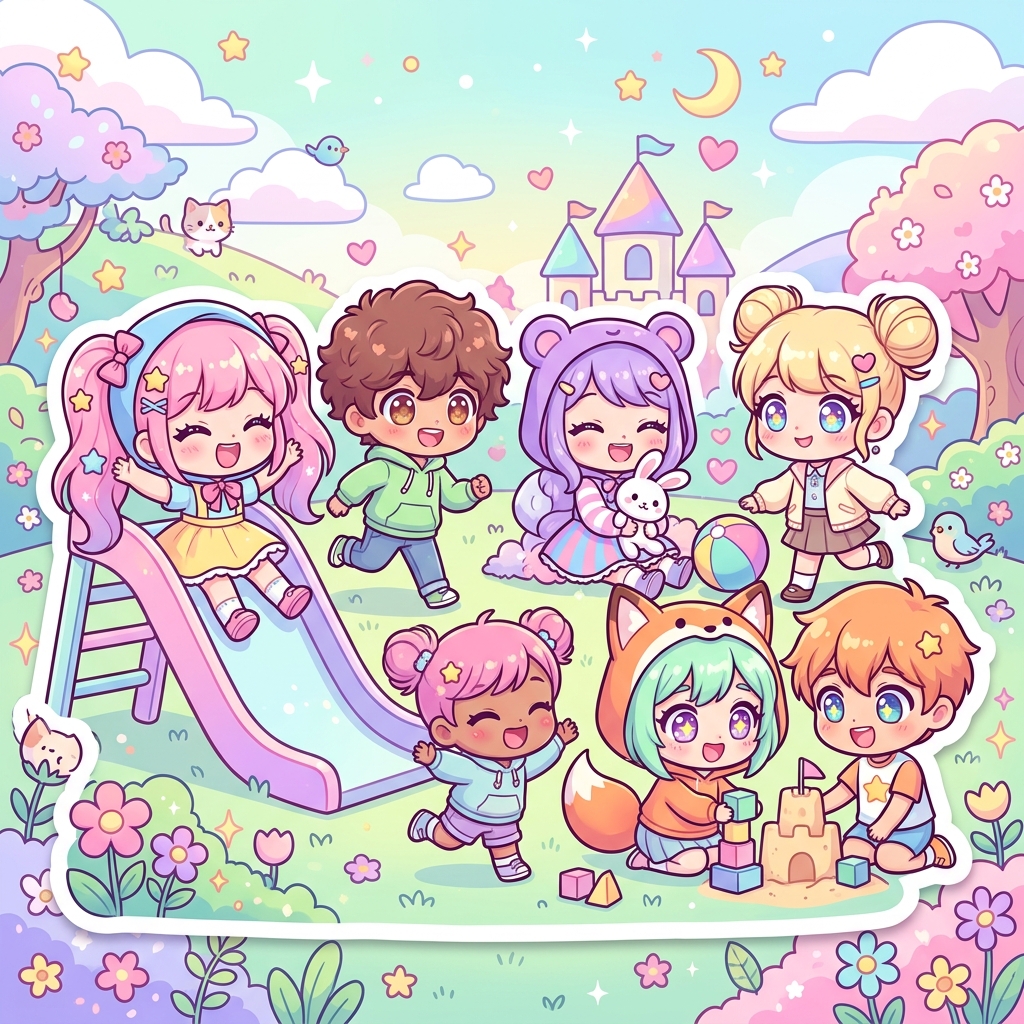
A strong OC remains recognizable even in simplified form.
Creator field guide
These notes help creators decide what to plan, what to ignore, and when a draft is ready for the next production step.
A memorable original character often combines two pressures: shy but reckless, elegant but broke, cheerful but haunted. That tension makes design choices less generic.
The outfit, prop, and posture should imply where the character lives and what kind of story they belong to.
Keep the name, role, motive, visual anchors, and speaking style. The OC becomes easier to use when the concept survives beyond one portrait.
Field notes
OC Maker should speak to creators who care about identity, not only appearance. Original characters need a reason to exist in a world. The best OC pages help users connect personality, role, contradiction, costume, prop, and story function so the result feels like a character rather than an avatar.
A good OC prompt often starts with tension. A character who is brave but avoids attention, elegant but secretly broke, or friendly but feared by others gives the design more substance. That tension can become posture, facial expression, clothing condition, or symbolic objects.
The workflow should also help users avoid accidental copying. Many OC requests are adjacent to anime, manga, and fandom communities, but the safer and more useful angle is to create original role, silhouette, and visual anchors inspired by genre conventions rather than duplicating a known character.
OC creation can also be framed as a world-building shortcut. If the character carries a tool, uniform, scar, badge, school item, or magical object, that single detail can imply rules about the world. The strongest OC pages should help users ask what the design reveals about status, danger, community, and daily life. That gives the output more narrative value than a generic full-body image.
Create a character who can enter an existing style of world without copying it.
Pair visual anchors with personality, motive, and speaking style.
The design becomes generic when it does not imply what the character does.
One memorable symbol is usually stronger than a pile of details.
After building an OC, use character sheets, dialogue generation, and story tools to make the character usable in scenes.
An OC Maker helps create an original character concept with personality, role, visual design, and reusable details.
Give the character a role, contradiction, motive, and a few visual symbols that connect to their story.
Yes. Include genre, art direction, outfit logic, expression, and the world the character belongs to.
Save the name, role, personality, silhouette, outfit anchors, color accents, and prop details.